Chesapeake Bay Under Sail: A Volunteer’s Voyage Aboard Schooner Virginia
Written By: Fred Rose


Background
For several years, I’ve been volunteering aboard the Schooner Virginia, a program of the Nauticus Foundation. Recently, I had the opportunity to join as crew positioning the vessel to Baltimore ahead of the Great Chesapeake Bay Schooner Race.
The journey took us up the Chesapeake Bay from Norfolk, a 3 day stop in Yorktown, anchoring overnight in Cambridge, MD, and then completing our transit in Baltimore. Along the way, we had the chance to serve as ambassadors for Nauticus and the city of Norfolk as we hosted educational and community sails. It was a great experience to see firsthand the Mid-Atlantic’s maritime tradition, economic significance, and current state of the Bay.
Getting Underway
On a sunny Wednesday morning, about a dozen volunteers and several full-time crew readied dock lines and carefully eased Schooner Virginia away from the pier at Nauticus. As we made our way down the Elizabeth River, we set the lower sails and with a gentle breeze, our journey began. We were not alone at this moment, as a couple dolphins greeted us to say bon voyage as we passed Craney Island heading for the open waters. We were underway on the Chesapeake Bay!
After a full day of cruising, we made our way into the York River and the historic waterfront of Yorktown, VA where we would dock at Riverwalk. Alongside other sailing vessels at sunset, it was easy to picture the centuries of ships that have worked these waters, from colonial-era to the oyster boats and cargo vessels that built the Mid-Atlantic’s economy.
That history stood in sharp contrast the next day with the arrival of a modern visitor anchored offshore – the Scenic Eclipse, a luxury expedition yacht. Our two different vessel types operating on the same river, was a unique perspective. Interestingly, I believe this same ship visited the Cruise Terminal in Norfolk several years ago.
Most mornings during the trip began with slow moments on deck as the sun rose in the east, the moon still hanging above the rigging as the sky awakened with an orange and blue hue over the water.
There’s a rhythm to life aboard that’s quite special. From hauling lines, standing watch, and sharing shipboard responsibilities with fellow crew, everyone works together to get the job done.
Education and Community
During the stay in Yorktown we were joined by NJROTC groups and the general public for sails. Hosting groups aboard reinforced why the Schooner Virginia program matters. Watching someone take in river views from the bow, or learning what each line does, allows people to connect to a tradition they may not normally experience. It was very cool to be part of these sails.
On Saturday morning, we took in lines, and made our way east on the York River, heading once again for the open bay. After a couple hours we made the turn north towards Baltimore. It was a full day of sailing with a healthy wind in our favor and at one point we made 10 knots speed, a real treat on a 120-foot vessel. The smiles from the crew were a sign of the positive spirit of the journey.
Later that evening just after dusk we pulled into our anchorage.
Sunday arrived with heavy rain and gusty winds as we pulled anchor and made our way out of the protected harbor of Cambridge, MD. Once we reached open waters, the seas grew to around 3-4 feet rolling around us. We had pre-emptively reefed the main sail to allow better control in anticipated heavier winds. Schooner Virginia handled the conditions perfectly and the crew knew their roles and we had a great sail. When it came time for me to take the helm on my watch, I was both excited and cautious as the conditions required. The professional crew for this voyage were knowledgeable and helpful as we set course and made adjustments to the wind and current.
After five or six hours, we passed under the Bay Bridge, and then into Baltimore harbor reaching Anchorage Marina, our final destination.
The Crew
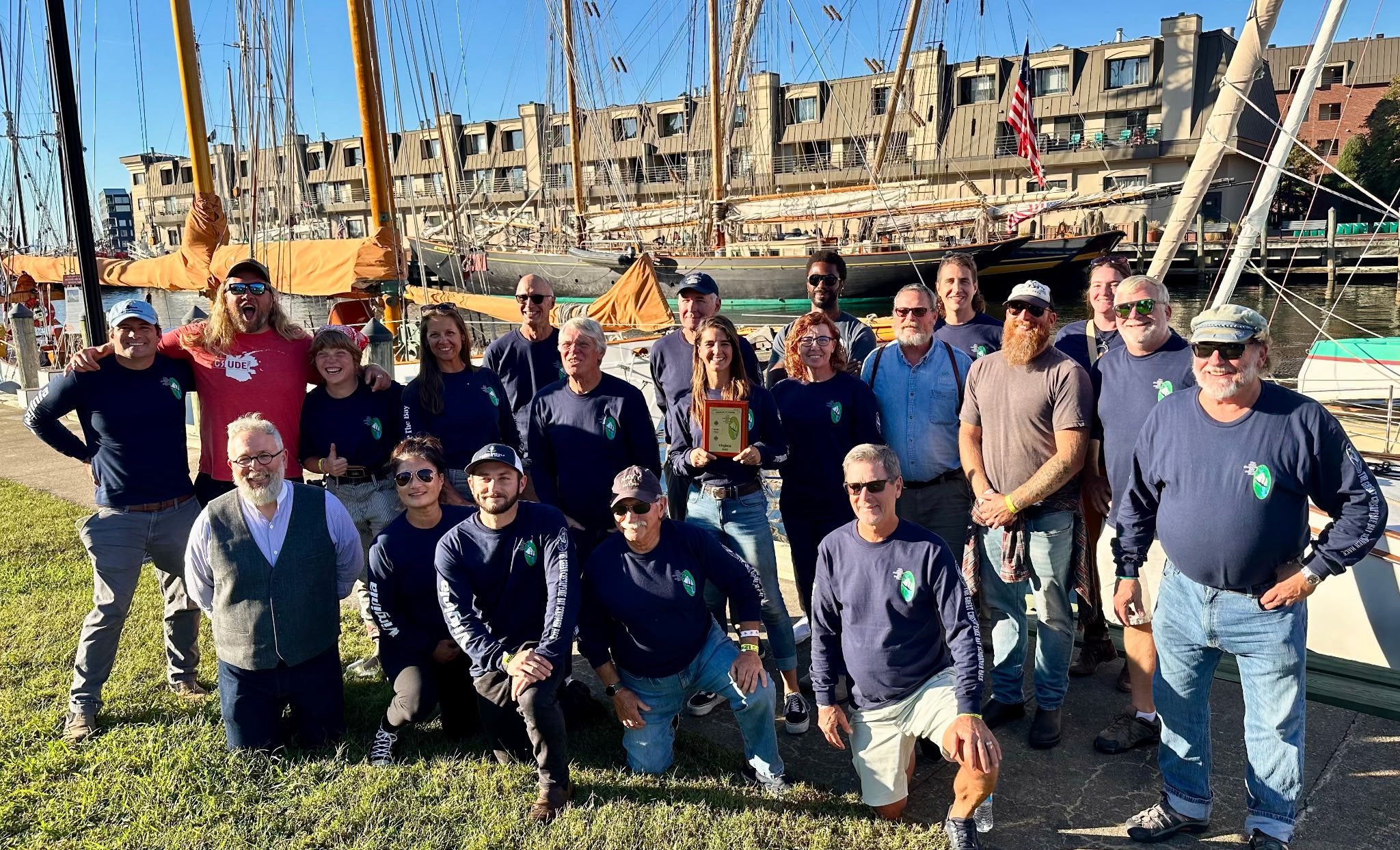
What can I say about the crew? There were so many different backgrounds represented during my time aboard. We had a retired physician, an aviator, navy and coast guard officers, business people, and historic vessel curators. It is safe to say that a common passion for sailing brought us together, but we left feeling connected through the journey, shared responsibilities, and awe that comes with traveling on the Chesapeake Bay.
The professional crew were top notch. From the Captain, Chief Mate, Engineer, Chef, to the handful of experienced sailors who joined the voyage. We were very lucky to have such a great group of people aboard together.
Takeaways
A journey like this 5-day trip, is very special. I was able to see areas of the Chesapeake Bay from a new perspective, with people who were strangers but through common experience became part of my community. Looking back, I grew both my abilities as a tall ship sailor and my appreciation for the wellbeing of our Chesapeake Bay watershed.
For anyone looking for a unique way to get involved in our maritime community, I highly recommend checking out opportunities with Nauticus Foundation.